







search
Vector 66
Vector bid wins header
news from member blog header
FrameworkNewsResources

ICCA and AC Forum Launch Charter to Strengthen International Association Meeting RFPs

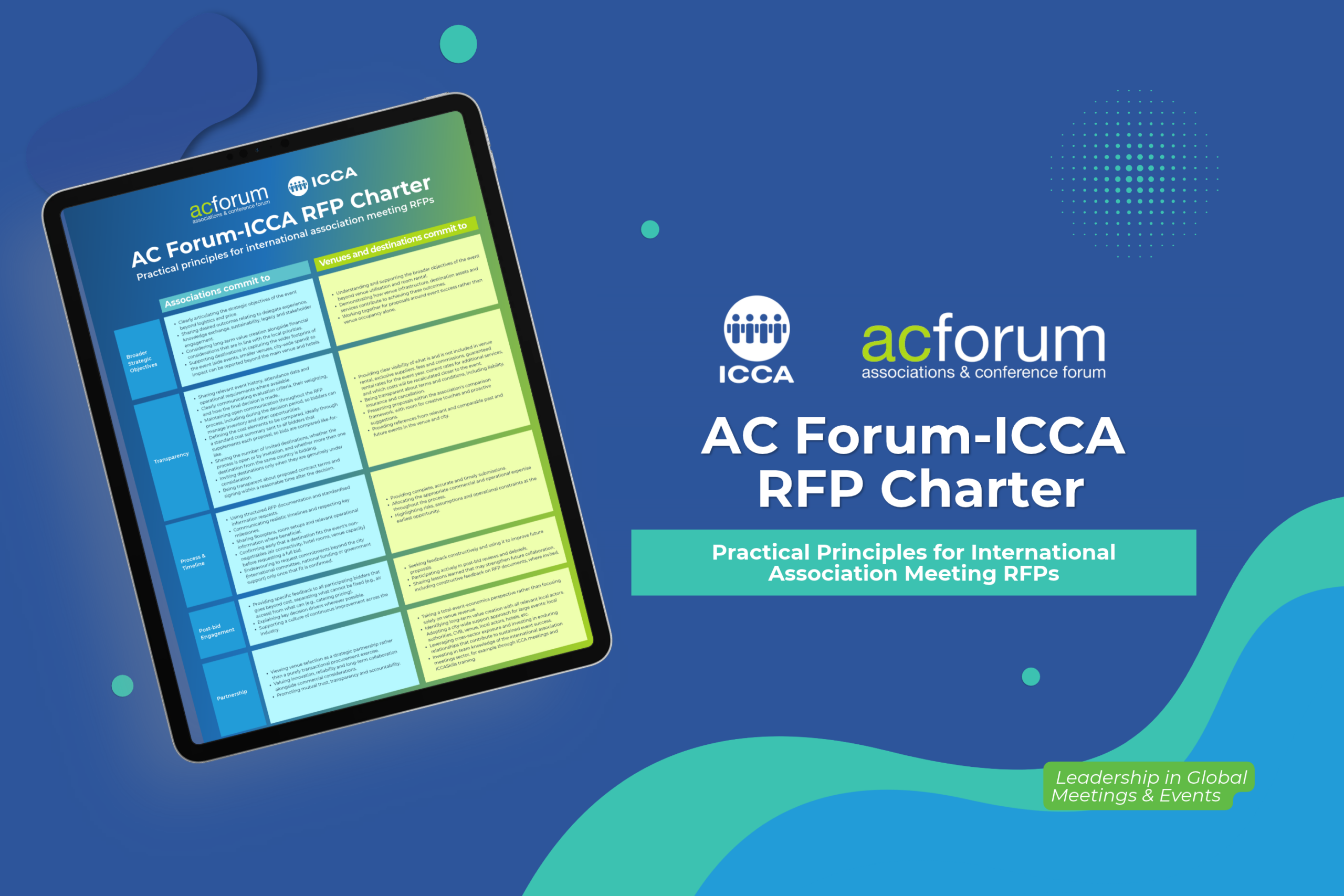
ICCA and AC Forum have launched the AC Forum–ICCA RFP Charter, a practical framework designed to strengthen the Request for Proposal (RFP) process for international association meetings and foster more transparent, collaborative and mutually beneficial relationships between associations, venues and destinations.

Launched in Panama City during the 65th ICCA Congress, the Charter sets out shared principles for how associations, venues and destinations can work together throughout the RFP process, from defining strategic objectives and setting realistic timelines to improving transparency, sharing feedback and building long-term partnerships. It encourages all parties to look beyond price and venue requirements to consider the broader value of meetings, including delegate experience, knowledge exchange, sustainability, legacy and impact on the wider destination.

The launch builds on the close collaboration between ICCA and AC Forum at the Congress. AC Forum was one of the Congress’s distinguished co-curators, contributing its expertise in association leadership to a first-of-its-kind programme that brought together perspectives from across and beyond the global business events industry.

The co-curator model reflected ICCA’s ambition to connect international association meetings with wider strategic conversations and to create new opportunities for collaboration. The RFP Charter puts that spirit into practice, translating shared industry priorities into principles that can guide the way associations, destinations and venues engage with one another.

A More Strategic Approach to the RFP Process

Dr Senthil Gopinath, CEO of ICCA, said:

“International association meetings are strategic platforms for knowledge exchange, collaboration and lasting impact. The RFP process should reflect that value from the very beginning. This Charter is an important step towards building stronger relationships between associations, destinations and venues, grounded in transparency, mutual understanding and a shared commitment to event success. By looking beyond price alone and focusing on the wider objectives of a meeting, we can create better outcomes for associations and the destinations that welcome them.”

Contact ICCA Associations Contact AC Forum

Oliver Wykes, President of AC Forum, said:
“Strengthening our meetings ecosystem means improving the way we work together, and that starts with a better understanding of each other’s objectives, needs and constraints. This Charter is an important first step towards enabling more effective and efficient collaboration between associations, destinations and venues, ultimately leading to more successful and impactful meetings.”

The Charter is intended as a practical reference for all parties involved in international association meeting bids. By encouraging clearer communication, better-informed decisions and constructive engagement before and after bids, ICCA and AC Forum aim to support a culture of continuous improvement across the industry.

Strengthening the Global Association Meetings Ecosystem
The Charter recognises that venue and destination selection should be a strategic partnership rather than a purely transactional procurement exercise. It encourages associations to communicate their objectives and evaluation criteria clearly, while asking venues and destinations to demonstrate how their infrastructure, services and local assets can contribute to the wider success of an event.

Its principles are organised around five key areas:

  • Broader strategic objectives: Aligning proposals with the event’s purpose, desired outcomes, delegate experience, sustainability ambitions and potential legacy, while considering value beyond financial and logistical factors.
  • Transparency: Improving clarity around evaluation criteria, costs, inclusions, contract terms, decision-making and communication throughout the bidding process.
  • Process and timeline: Using structured documentation, realistic milestones and complete information to help all parties assess feasibility and prepare stronger proposals.
  • Post-bid engagement: Encouraging constructive feedback, clear explanations of decision drivers and learning that can improve future bids.
  • Partnership: Building mutual trust, accountability and long-term relationships, with a focus on total-event economics and the wider contribution meetings can make to a destination.

The collaboration reflects a shared belief that successful international meetings begin well before delegates arrive. They start with strong partnerships, clear objectives and a bidding process that recognises the value every party brings.


Read the Charter here
FrameworkNewsResources18 November 20264 min

ICCA and AC Forum Launch Charter to Strengthen International Association Meeting RFPs

ICCA and AC Forum have launched the AC Forum–ICCA RFP Charter, a practical framework designed to strengthen the Request for Proposal (RFP) process for international association meetings and foster more transparent, collaborative and mutually beneficial relationships between associations, venues and destinations.

Launched in Panama City during the 65th ICCA Congress, the Charter sets out shared principles for how associations, venues and destinations can work together throughout the RFP process, from defining strategic objectives and setting realistic timelines to improving transparency, sharing feedback and building long-term partnerships. It encourages all parties to look beyond price and venue requirements to consider the broader value of meetings, including delegate experience, knowledge exchange, sustainability, legacy and impact on the wider destination.

The launch builds on the close collaboration between ICCA and AC Forum at the Congress. AC Forum was one of the Congress’s distinguished co-curators, contributing its expertise in association leadership to a first-of-its-kind programme that brought together perspectives from across and beyond the global business events industry.

The co-curator model reflected ICCA’s ambition to connect international association meetings with wider strategic conversations and to create new opportunities for collaboration. The RFP Charter puts that spirit into practice, translating shared industry priorities into principles that can guide the way associations, destinations and venues engage with one another.

A More Strategic Approach to the RFP Process

Dr Senthil Gopinath, CEO of ICCA, said:

“International association meetings are strategic platforms for knowledge exchange, collaboration and lasting impact. The RFP process should reflect that value from the very beginning. This Charter is an important step towards building stronger relationships between associations, destinations and venues, grounded in transparency, mutual understanding and a shared commitment to event success. By looking beyond price alone and focusing on the wider objectives of a meeting, we can create better outcomes for associations and the destinations that welcome them.”

Contact ICCA Associations Contact AC Forum

Oliver Wykes, President of AC Forum, said:
“Strengthening our meetings ecosystem means improving the way we work together, and that starts with a better understanding of each other’s objectives, needs and constraints. This Charter is an important first step towards enabling more effective and efficient collaboration between associations, destinations and venues, ultimately leading to more successful and impactful meetings.”

The Charter is intended as a practical reference for all parties involved in international association meeting bids. By encouraging clearer communication, better-informed decisions and constructive engagement before and after bids, ICCA and AC Forum aim to support a culture of continuous improvement across the industry.

Strengthening the Global Association Meetings Ecosystem
The Charter recognises that venue and destination selection should be a strategic partnership rather than a purely transactional procurement exercise. It encourages associations to communicate their objectives and evaluation criteria clearly, while asking venues and destinations to demonstrate how their infrastructure, services and local assets can contribute to the wider success of an event.

Its principles are organised around five key areas:

  • Broader strategic objectives: Aligning proposals with the event’s purpose, desired outcomes, delegate experience, sustainability ambitions and potential legacy, while considering value beyond financial and logistical factors.
  • Transparency: Improving clarity around evaluation criteria, costs, inclusions, contract terms, decision-making and communication throughout the bidding process.
  • Process and timeline: Using structured documentation, realistic milestones and complete information to help all parties assess feasibility and prepare stronger proposals.
  • Post-bid engagement: Encouraging constructive feedback, clear explanations of decision drivers and learning that can improve future bids.
  • Partnership: Building mutual trust, accountability and long-term relationships, with a focus on total-event economics and the wider contribution meetings can make to a destination.

The collaboration reflects a shared belief that successful international meetings begin well before delegates arrive. They start with strong partnerships, clear objectives and a bidding process that recognises the value every party brings.


Read the Charter here

Share:
Vector5
Your win is our win, let’s celebrate the success of our members around the world. Got a bid win to share?
Submit Your Bid Wins
Close Menu